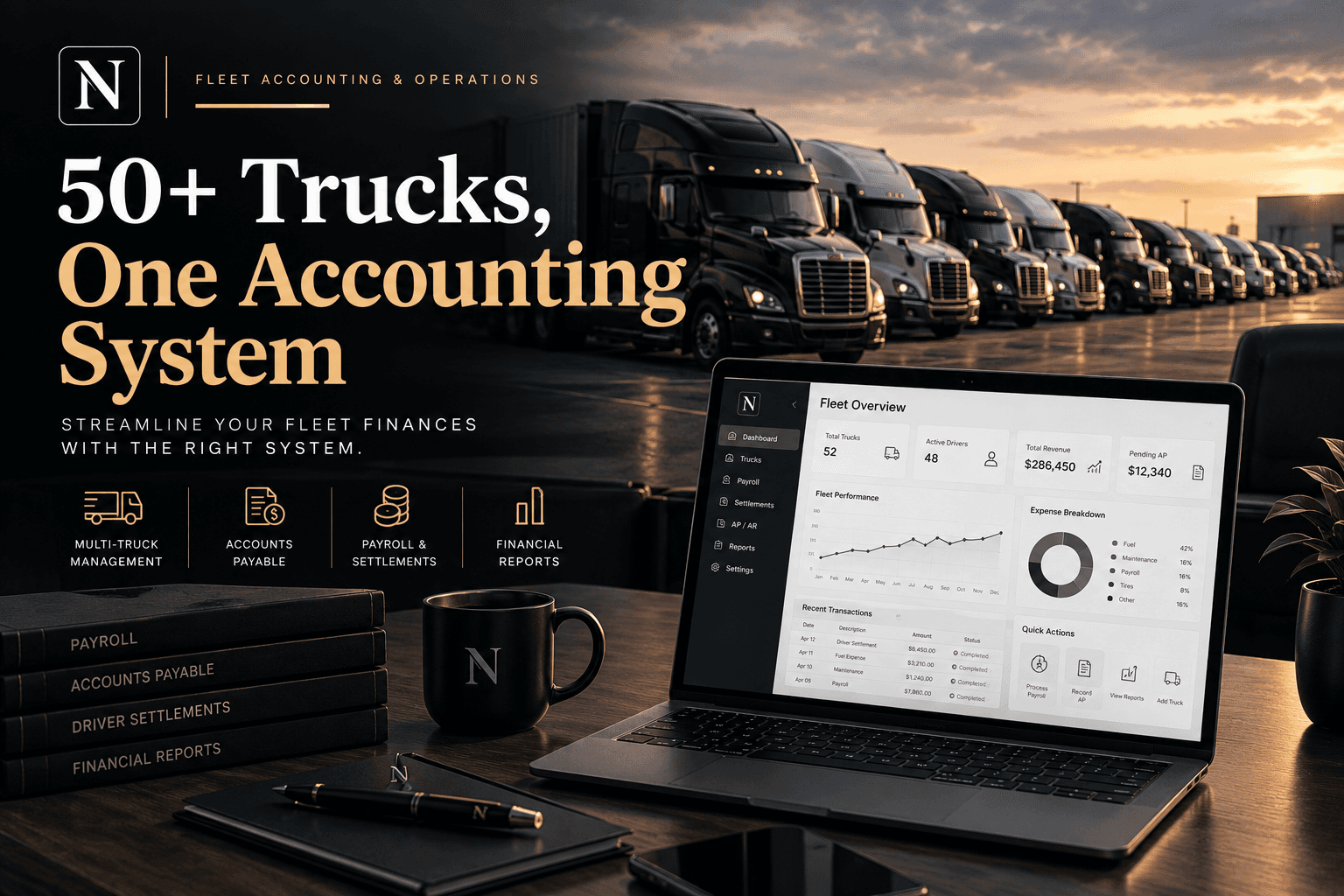
Strategic purchasing helps trucking companies control expenses, improve supplier relationships, and reduce unnecessary operating costs.

Ali Hamza
AP / AR / Procurement
9
min read

Introduction
In trucking operations, controlling costs is just as important as generating revenue. Fuel, maintenance, truck parts, tires, equipment, office supplies, technology, insurance-related services, and other operational purchases can create significant expenses across a fleet.
This is where trucking procurement becomes an important part of fleet financial management.
Procurement is more than simply purchasing products when they are needed. A well-managed procurement process evaluates suppliers, compares prices, monitors purchasing patterns, negotiates better terms, coordinates with inventory management, and ensures that purchases support operational requirements.
For a trucking company, strategic purchasing can directly influence maintenance costs, inventory levels, cash flow, and overall fleet profitability.
When procurement works closely with accounting, maintenance, inventory, and operations teams, management gains better control over where money is being spent and whether those purchases are delivering value.
What Is Trucking Procurement?
Trucking procurement is the structured process of sourcing, purchasing, receiving, and managing goods and services required to operate a trucking business.
These purchases may include:
Truck and trailer parts
Tires and wheels
Lubricants and fluids
Maintenance supplies
Shop equipment
Safety equipment
Office supplies
Technology and software
Transportation-related services
Outside maintenance services
Fuel-related products and services
Warehouse and inventory supplies
The goal is not simply to find the cheapest supplier. Effective procurement focuses on obtaining the right product, at the right price, from the right supplier, at the right time.
Why Procurement Matters in Fleet Accounting
Procurement decisions eventually appear in the company's financial records.
A maintenance department may purchase parts to keep trucks operating, while the accounting department records the resulting vendor bills and expenses. If purchasing decisions are not controlled, unnecessary or overpriced purchases can increase operating costs.
Strategic procurement helps accounting teams by providing:
Better purchasing documentation
More predictable expenses
Improved vendor records
Better invoice verification
Stronger budget control
More accurate expense reporting
Better inventory visibility
Improved cash-flow planning
For fleet accounting, procurement is therefore closely connected to Accounts Payable, inventory management, maintenance expenses, and financial reporting.
Strategic Purchasing vs. Routine Purchasing
There is an important difference between routine purchasing and strategic purchasing.
Routine Purchasing
Routine purchasing generally focuses on fulfilling an immediate requirement.
For example:
A truck needs a replacement component, so the maintenance team orders the part from the usual supplier.
The purchase solves the immediate problem, but the company may not have evaluated alternative suppliers or pricing.
Strategic Purchasing
Strategic purchasing looks at the broader financial and operational impact.
The purchasing team may:
Review historical purchasing data.
Identify frequently purchased items.
Compare multiple suppliers.
Negotiate pricing.
Evaluate quality.
Review delivery performance.
Establish preferred suppliers.
Monitor future purchasing requirements.
This approach can produce savings over time without compromising fleet reliability.
The Trucking Procurement Process
A structured procurement process can be divided into several stages.
1. Identify the Requirement
The first step is determining what the company actually needs.
For example, the maintenance department may identify that several trucks require the same replacement part.
Before purchasing, the company should determine:
Quantity required
Required specifications
Urgency
Current inventory
Historical usage
Approved supplier options
This prevents unnecessary purchases and duplicate ordering.
2. Check Existing Inventory
Procurement should work closely with inventory management.
Before ordering a part, the company should check whether it is already available in stock.
For example:
Required quantity: 10 units
Available inventory: 6 units
Additional requirement: 4 units
Instead of purchasing 10 units, procurement may only need to purchase four.
This simple control can reduce unnecessary inventory spending.
3. Compare Suppliers
Supplier comparison is one of the most important parts of strategic purchasing.
A company may compare suppliers based on:
Factor | Supplier A | Supplier B | Supplier C |
|---|---|---|---|
Unit Price | $125 | $118 | $121 |
Delivery | 2 days | 4 days | 2 days |
Warranty | 12 months | 6 months | 12 months |
Payment Terms | Net 30 | Net 15 | Net 30 |
Quality | High | Medium | High |
The lowest price is not automatically the best option.
A slightly higher-priced supplier may provide better quality, faster delivery, longer warranty coverage, or more favorable payment terms.
Supplier Management
Effective supplier management is an important component of fleet procurement.
A trucking company may work with multiple suppliers for parts, tires, maintenance services, equipment, and other operational requirements.
Supplier performance can be evaluated using:
Pricing
Product quality
Delivery reliability
Availability
Warranty support
Communication
Payment terms
Return policies
Service responsiveness
Maintaining reliable supplier relationships can make purchasing more predictable and reduce operational disruptions.
Strategic Price Negotiation
Purchasing volume can create opportunities for better pricing.
Suppose a fleet purchases a particular component regularly.
If the company purchases:
100 units × $150 = $15,000
After negotiating with the supplier, the price is reduced to:
100 units × $135 = $13,500
Potential purchasing savings:
$15,000 − $13,500 = $1,500
A $15 reduction per unit may appear small, but repeated purchases can create meaningful annual savings.
The procurement team should therefore monitor high-volume purchases and identify areas where negotiation may provide value.
Purchasing Terms and Cash Flow
Supplier payment terms can also affect cash flow.
Consider two suppliers:
Supplier A: Net 15
Supplier B: Net 30
If the pricing and other conditions are comparable, the longer payment period may provide additional time for the company to manage cash before the invoice becomes due.
However, payment terms should always be evaluated alongside price, supplier reliability, and company policy.
Procurement and accounting should work together to understand the financial impact of purchasing agreements.
Procurement and Accounts Payable
Procurement and Accounts Payable are closely connected.
A controlled workflow can look like this:
Purchase Request → Approval → Purchase Order → Receiving → Invoice → Verification → Payment
Accounting can verify that:
The goods or services were actually received.
The invoice matches the purchase.
The price is correct.
The quantity is correct.
The supplier is properly recorded.
The invoice has not already been processed.
This helps reduce duplicate payments, incorrect invoices, and unauthorized purchases.
Procurement and Fleet Inventory
Strategic purchasing should also be connected to inventory management.
Ordering too much can result in:
Excess inventory
Cash tied up in parts
Storage requirements
Obsolete or slow-moving stock
Ordering too little can result in:
Maintenance delays
Emergency purchases
Higher expedited shipping costs
Truck downtime
A balanced procurement strategy uses historical usage and operational requirements to determine appropriate purchasing levels.
Example: Reducing Fleet Purchasing Costs
Consider a fleet that regularly purchases a maintenance component.
Annual requirement:
500 units
Current supplier price:
$80 per unit
Annual purchasing cost:
500 × $80 = $40,000
After supplier evaluation, the company negotiates a new price:
$72 per unit
New annual purchasing cost:
500 × $72 = $36,000
Potential annual savings:
$40,000 − $36,000 = $4,000
If similar opportunities exist across multiple frequently purchased items, the cumulative savings can become significant.
Procurement Data and Expense Analysis
Accounting data can help identify procurement opportunities.
For example, monthly purchasing reports can reveal:
Top vendors by spending
Highest-cost parts
Frequently purchased items
Price changes
Emergency purchases
Maintenance-related spending
Slow-moving inventory
Recurring vendor charges
This information can help management determine where strategic purchasing attention is most needed.
Excel, QuickBooks Desktop, Zoho Books, and inventory systems can support different parts of this analysis depending on the company's workflow.
Common Procurement Problems in Trucking
Several purchasing problems can increase fleet costs.
Buying Without Comparison
Using the same supplier for every purchase may be convenient but can prevent the company from identifying better pricing or terms.
Emergency Purchasing
Urgent purchases may carry higher prices or expedited shipping costs.
Poor Inventory Coordination
Purchasing items that are already in stock creates unnecessary spending.
Weak Vendor Records
Poor supplier documentation makes it harder to evaluate vendor performance and spending.
Lack of Approval Controls
Unauthorized purchases can create budget and accounting problems.
Ignoring Total Cost
The cheapest purchase price does not always represent the lowest overall cost. Quality, warranty, delivery, downtime, and service should also be considered.
Best Practices for Trucking Procurement
A strong fleet procurement process should include:
1. Maintain Approved Suppliers
Create a list of reliable suppliers based on price, quality, service, and delivery performance.
2. Compare Major Purchases
For significant purchases, compare multiple suppliers whenever practical.
3. Track Purchasing History
Review historical prices and quantities to identify changes and savings opportunities.
4. Coordinate With Inventory
Check existing stock before placing new orders.
5. Establish Approval Procedures
Define who can request, approve, and process purchases.
6. Negotiate Recurring Purchases
Use purchasing volume and historical data to negotiate better pricing or terms.
7. Review Vendor Performance
Supplier selection should consider long-term reliability rather than price alone.
8. Reconcile Purchasing With Accounting
Make sure purchasing records, invoices, payments, and financial records agree.
Daily, Weekly, and Monthly Procurement Workflow
Daily
Review urgent purchasing requirements.
Verify purchase requests.
Check inventory availability.
Process approved orders.
Monitor critical parts.
Weekly
Review open purchase orders.
Compare supplier pricing.
Follow up on delayed deliveries.
Review major purchases.
Coordinate with maintenance and inventory teams.
Monthly
Analyze vendor spending.
Review purchasing trends.
Identify cost-saving opportunities.
Evaluate supplier performance.
Compare purchasing expenses with budgets.
Review inventory purchasing patterns.
Key Takeaways
Trucking procurement is more than simply buying parts and supplies.
Strategic purchasing can help reduce fleet operating costs.
Supplier comparison can identify better prices and terms.
Procurement should be connected to inventory management.
Accounts Payable should verify invoices before payment.
Purchasing data can reveal recurring cost-saving opportunities.
Supplier quality and reliability should be evaluated alongside price.
Negotiating recurring purchases can create meaningful long-term savings.
Procurement decisions should support both operational efficiency and financial control.
Conclusion
Strategic procurement can have a direct impact on the financial performance of a trucking company.
When purchasing decisions are based on supplier performance, historical spending, inventory requirements, pricing, payment terms, and operational needs, fleet management can gain greater control over expenses.
For accounting teams, procurement also provides an important connection between purchasing, inventory, Accounts Payable, cash flow, and financial reporting.
The strongest procurement process is not simply focused on getting the lowest price. It focuses on obtaining the right products and services at an appropriate total cost while maintaining quality, availability, and reliable supplier relationships.
For growing trucking companies, integrating procurement with accounting and fleet operations can turn purchasing from a routine administrative function into an important cost-management strategy.
Frequently Asked Questions
What is trucking procurement?
Trucking procurement is the process of sourcing, purchasing, receiving, and managing the products and services required to operate a trucking fleet.
How does strategic purchasing reduce fleet costs?
Strategic purchasing can reduce costs through supplier comparison, price negotiation, better purchasing planning, inventory coordination, and improved vendor management.
Why is supplier management important in trucking?
Reliable suppliers can provide consistent pricing, quality, availability, delivery performance, and service, helping reduce purchasing risks and operational disruptions.
How does procurement connect with accounting?
Procurement generates purchasing transactions that flow into Accounts Payable, expense records, inventory records, cash-flow planning, and financial reporting.
What software can support trucking procurement?
Companies may use accounting and inventory tools such as QuickBooks Desktop, Excel, Zoho Books, or dedicated purchasing and inventory systems depending on their operational requirements.
About the Author
Ali Hamza is an accounting professional with experience in fleet accounting, driver settlements, payroll, financial reporting, accounts payable, inventory management, and transportation operations. His professional focus combines accounting accuracy with practical fleet cost and operational management.
Fleet Accounting & Transportation Finance Insights is a professional knowledge series covering trucking accounting, payroll, settlements, procurement, inventory, financial reporting, and transportation finance.