Learn how structured fleet accounting helps organize load settlements, payroll, expenses, and financial reporting across 50+ truck fleet.

Ali Hamza
Fleet Accounting & Finance
4
min read
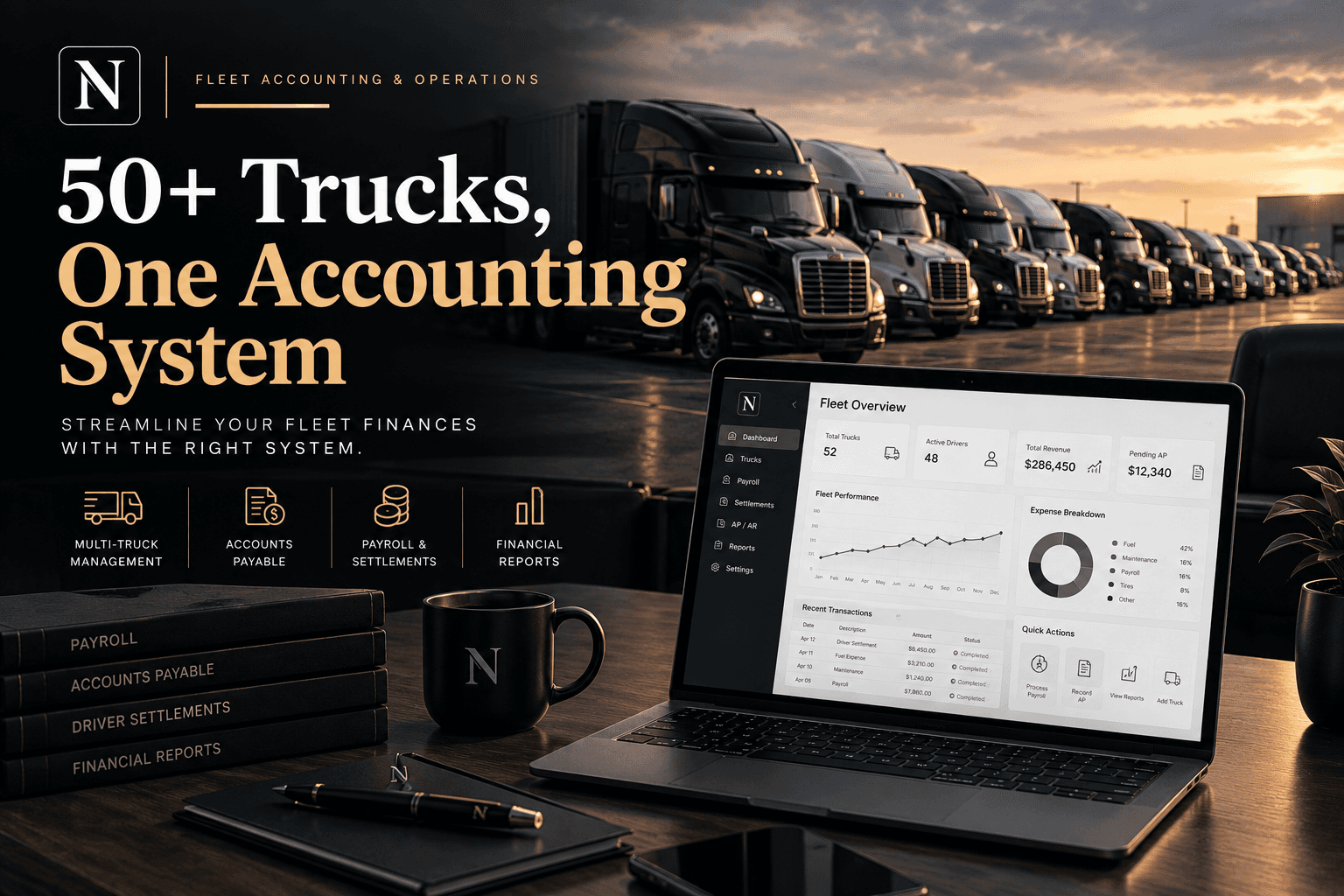
Managing accounting for a growing trucking fleet requires more than recording income and expenses. When a business operates 50+ trucks, financial information is generated from loads, driver settlements, payroll, vendor bills, fleet expenses, purchasing, inventory, and daily operations.
The challenge is keeping all of these activities organized and connected.
This is where structured fleet accounting becomes important.
Why Fleet Accounting Needs Structure
A trucking business can generate a large amount of financial information every day. Each load can create revenue and settlement activity, while the fleet continuously generates expenses and vendor transactions.
Without a consistent process, it becomes difficult to maintain a clear picture of what has been earned, what has been paid, what is outstanding, and how different operational activities affect the company's financial records.
Fleet accounting brings these activities into a more organized financial workflow.
The goal is simple: make operational information easier to process, track, review, and report.
Connecting Loads With Financial Records
Load activity is one of the foundations of trucking operations.
Driver and load settlements need to be processed accurately and supported by the appropriate operational information. My experience includes using LoadStop for load settlements, helping organize settlement activity as part of the broader fleet accounting workflow.
A structured settlement process can help keep load information, driver compensation, deductions, and related records organized.
This becomes increasingly important when dealing with a large number of trucks and drivers.
Managing Accounts Payable and Expenses
Fleet operations also involve continuous vendor and expense activity.
Maintenance, services, supplies, equipment, and other operational costs all contribute to the company's financial records. Accounts payable therefore needs to be organized so that vendor bills, payments, and supporting records can be tracked properly.
I approach accounts payable as part of the overall accounting process rather than as an isolated task.
The same principle applies to fleet expense tracking. Using Excel for financial tracking, analysis, and reporting can help organize financial information and make it easier to review.
Payroll and Financial Reporting
Payroll is another important part of fleet accounting, particularly when driver compensation is connected to settlement activity.
I use QuickBooks Desktop for payroll and financial reporting, helping maintain financial records and reporting workflows alongside other fleet accounting responsibilities.
The connection between settlements, payroll, and financial reporting matters because these activities should ultimately contribute to one consistent financial picture.
Inventory and Procurement
Accounting also connects with operational purchasing.
Inventory and procurement activity can affect both daily operations and financial records. I use Zoho Inventory for inventory management and purchasing workflows, while my experience with SAP includes business operations and procurement workflows.
Keeping purchasing and inventory information organized helps create better visibility between operational requirements and financial activity.
Using the Right Tools for the Workflow
Different accounting and operational tasks may require different systems.
My primary software mapping includes:
QuickBooks Desktop — Payroll and financial reporting
LoadStop — Load settlements
Zoho Inventory — Inventory and purchasing workflows
Excel — Financial tracking, analysis, and reporting
Zoho Books — Accounting and financial data organization
SAP — Business operations and procurement workflows
The software itself is only one part of the process. The real value comes from having clear workflows around the information being managed.
Final Thoughts
Managing accounting for 50+ trucks requires organization across multiple financial and operational areas.
Driver settlements, accounts payable, payroll, fleet expenses, inventory, procurement, and financial reporting are all connected. When these workflows are properly structured, it becomes easier to maintain organized financial records and understand the relationship between daily fleet operations and accounting.
For me, fleet accounting is not simply about recording transactions. It is about creating a reliable financial structure that supports the operation behind the numbers.
One fleet may have dozens of moving parts. A structured accounting system brings those parts together into one clearer financial picture.


